

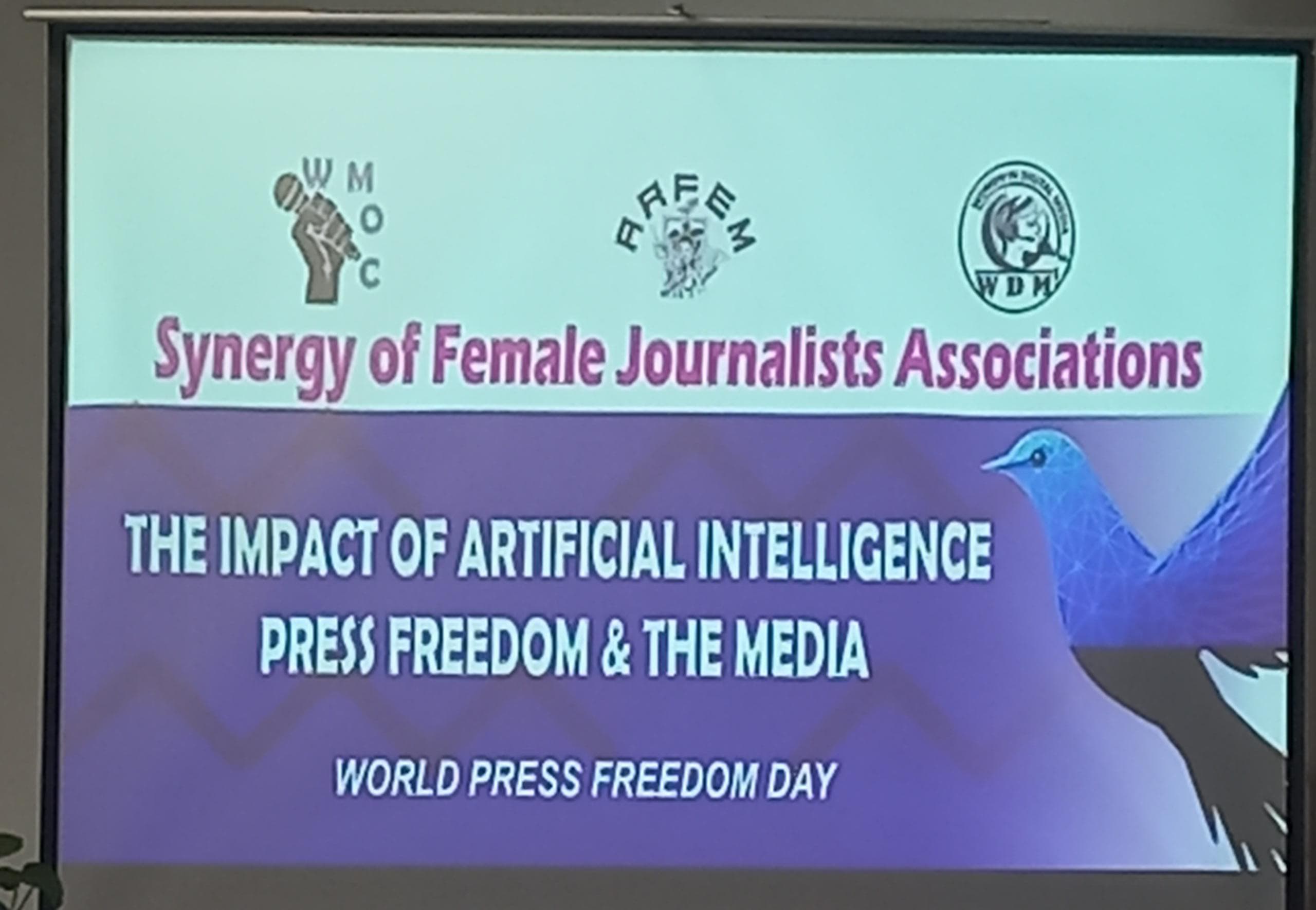
The Synergy of Female Journalists Associations—Association Rwandaise des femmes de Média (ARFEM), Women Media Owners for Change (WMOC), and Women in Digital Media (WDM), in collaboration with Fojo Media Institute and the Rwanda Journalists Association (ARJ) on 3rd May 2025 awarded media institutions in Rwanda for their outstanding commitment to gender equality.
The event, held at M Hotel in Kigali, as part of the annual World Press Freedom Day celebration saw three media houses, each awarded a cash prize of two million five hundred thousand Rwandan francs (2,500,000), for successfully implementing gender-responsive and anti-harassment measures based on assessments carried out by the Synergy and guided by national and international best practices.
These were; 88.8 FM Energy Radio Musanze–awarded for Most Gender-Inclusive Media House, The New Times Publication–Best Implementation of Anti-Sexual Harassment Policies and Outstanding Supportive Environment for Female Journalists, while Izuba Radio and TV was recognized for meticulously creating Editorial Content that promotes Gender Equality.


According to Doreen Umutesi, the Chairperson Synergy of Female Journalists Associations,a survey was carried out in November 2024 during the 16 days of Activism against Gender Based Violence, and the results were alarming. Out of 40 media houses in Rwanda, 90 percent, neither had gender, nor sexual harassment policies enacted.
“We discovered that most of the media houses in Rwanda did not implement some of the key mechanisms like having a gender equality focal point, or a committee where journalists can report sexual harassment,” she stated.
To curb this, they initiated an awarding process aimed at appreciating media houses that were gender responsive and inclusive. “Media houses with more than ten employees were selected for the awarding process–with a focus on the ratio of women to men, in addition to gender equality mechanisms,” explained Umutesi.
As a result, the jury narrowed down to eight media houses out of forty during the first selection procedure, and later three. “A thorough investigation had to be carried out to ensure that what the media managers were saying was actually the truth,” stressed Umutesi who added that, “It’s one thing for the mechanisms to be in place, and another for the journalists to be aware of them.”
Besides, while Rwanda has made strides in gender equality in the areas of political representation, the media sector still grapples with female participation, with data from the national gender statistics report recording only 23.9 percent of accredited female journalists, necessitating an upscale.
In line with the WPFD global theme, “Reporting in the Brave New World: The Impact of Artificial Intelligence (AI) on Press Freedom and the Media,” the event also spotlighted the intersection of AI, gender, and media freedom.
Panelists explored how ‘AI is shaping the media environment, including opportunities for women journalists and ethical challenges such as bias, safety, and representation in the digital space.’

“AI is facilitating our work, from creation to dissemination. This has helped us to customize our content, track consumer appreciation, as well as produce adequate content,” remarked Brigitte Uwamariya, the Managing Director radio Ibuka.
Uwamariya however acknowledged challenges AI has imposed on the industry like misinformation and lack of trust, urging journalists to be keen while incorporating this new technology in their field of work.
For journalists yet to embrace Artificial Intelligence, Jonas Nyman, the international program coordinator within Fojo asserted that without AI, there will not be sustainability for journalism moving forward. “AI is here and it’s going to stay. You need to learn how to use it, and adapt to it, all whilst being ethical and responsible.”

Echoing similar sentiments, Barore Cléophas, Director General RBA ( Rwanda Broadcasting Agency) said, “the introduction of AI into our traditional media gives the same sensation and feelings ( admiration and fear) computer and internet invention in the 90’s gave.”
He added that, “the only thing we can do is adopt the principle that we cannot avoid technology, but embrace it and make sure that our staff, especially journalists, are always equipped with the tools required for effective operation.”
Observed annually on 3rd May, the World Press Freedom Day serves as a Global reminder of the importance of press freedom and the responsibility of the media in upholding democratic values.


