
During the thirtieth commemoration of the 1994 genocide against the Tutsi, Irma Ihumure, through a thirty series podcast-Voices of Hope, interviewed thirty courageous women survivors. Their accounts, like many others from survivors of such atrocities, carried a weight too heavy to ingest—rape, HIV/AIDS contraction, firsthand witness of brutal killings, among other inhumane actions.
A survivor herself, Irma couldn’t help but see beyond their words—scars of a past that will never fade, homes that had fallen into disrepair and stories too heavy to bear alone.
“I was shocked to learn that the majority of these women were sharing their testimonies for the first time, despite their age. Although the stories were too heavy to digest, their resilience cemented my own healing journey,” explained Irma.
Earlier, Irma had embarked on a personal journey towards healing. So, she felt the urge to not ‘just remember’ but restore the dignity of the ‘mothers of the nation’.
In her words, “after listening to their stories, I realised that I wanted to keep doing this, to know them better—where they live, their lifestyles, and so on.”
This ‘cause’ would later lead Irma to one of the survivor’s homes, which she says was in a ‘sorry’ state. Prompting her to solicit funds from well wishers to renovate it.
“The before and after of the house was remarkable,” she notes. Before sharing how it triggered ‘something’ within her.
“When I saw the joy on this lady’s face, I couldn’t help but think of my own mother. Whether she would be in the same state had she survived the 1994 genocide against the Tutsi.” This lady is in her late fifties, a widow, HIV positive, and with no kids, added Irma.
Early Life
Irma recalls growing up under the watch of her adoptive parents—a family so loving and filled with warmth that shielded her from the ‘full force’ of grief. Until whispers of the past found their way to her ears.
“I often heard people who visited us at home say I looked like my mother, and wondered who that mother they spoke of was. Because, I believed my aunt to be my mother,” she recounted.
Being the last born, Irma’s siblings endeavored to protect her from the truth although their efforts were not long-lasting. By age seven, she knew the truth about her ‘fate’-an orphan, a label she refused to acknowledge throughout childhood.
The Road to Healing
Irma’s quest for ‘knowledge’ led her to China to further her education—placing her in solitude, the first she had been since time immemorial.
One would expect her to relish the moment—independence, different country, new people, name it. Instead, memories surfaced, throwing her into depression.
For instance, she recalled a time in boarding school when she faked being sick, reaching out to the headmistress for permission to return home. On being asked where home was, Irma experienced a meltdown.
“She was just asking me about the geographical location of my house, because I was in Butare. However, I just burst into tears. Because to be honest, where was ‘home’ for me?”
Another scenario was when she was nine years old and the authorities visited her school to register genocide survivors. Part of her class insisted that she was amongst them, while the other believed she wasn’t—having seen her ‘supposed’ mother pick her from school everyday. These ganged upon her for the truth about her status, a thing she admits was ‘unsettling’.
Fast forward, Irma resorted to journaling her feelings—starting with pages only she could read, and later, with the rest of the world.
“I first shared my story as a genocide survivor in 2019. It was on 10th April, during the commemoration when I posted a photo of my late mom,” she remarked. Adding that, it took her years of journaling, crying and grieving.
Present day
Famously known as ‘lady Irma’ on her social media platforms, Irma is an architect and project manager. She is also a life coach passionate about impacting communities and inspiring change.
Irma strongly believes that each one of us carry ‘unspoken’ trauma, whether its from the genocide, abuse, abandonment or silence.
She stresses that whilst some scars can be invisible, they’re still real and ‘we’ ought to face them, lest they shape ‘our’ life.
“We often think of trauma as ‘unique’, life shuttering events like the genocide,violence, or the loss of loved ones. We term them the ‘big T’s’ because they leave visible scars. However, there are also other kinds of traumas that we rarely talk about,” explained Irma.
She added, “these are known as ‘small T trauma—emotional wounds that were not met. For example, moments when one is not comforted, or when their friends never show up when needed.”
Regardless of the nature of trauma, however, healing is necessary. By so doing, strength is nurtured and life flourishes.
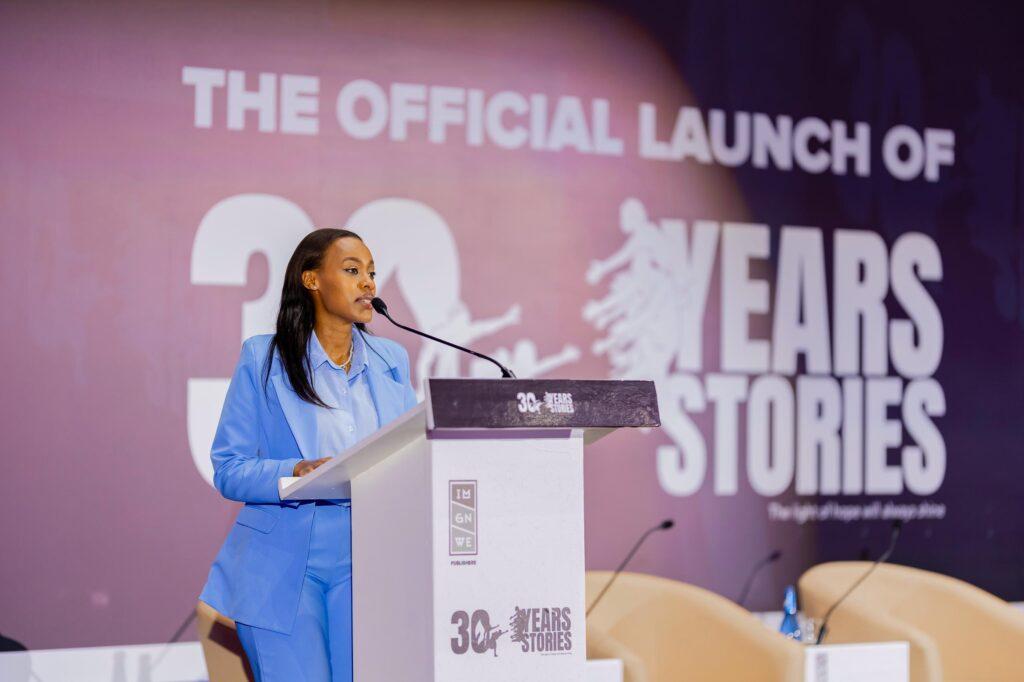
“Healing is not about erasing your past or feeling threatened by it. It’s about making peace with what you have lost, and finding the strength to live fully with what remains,” Irma remarked.
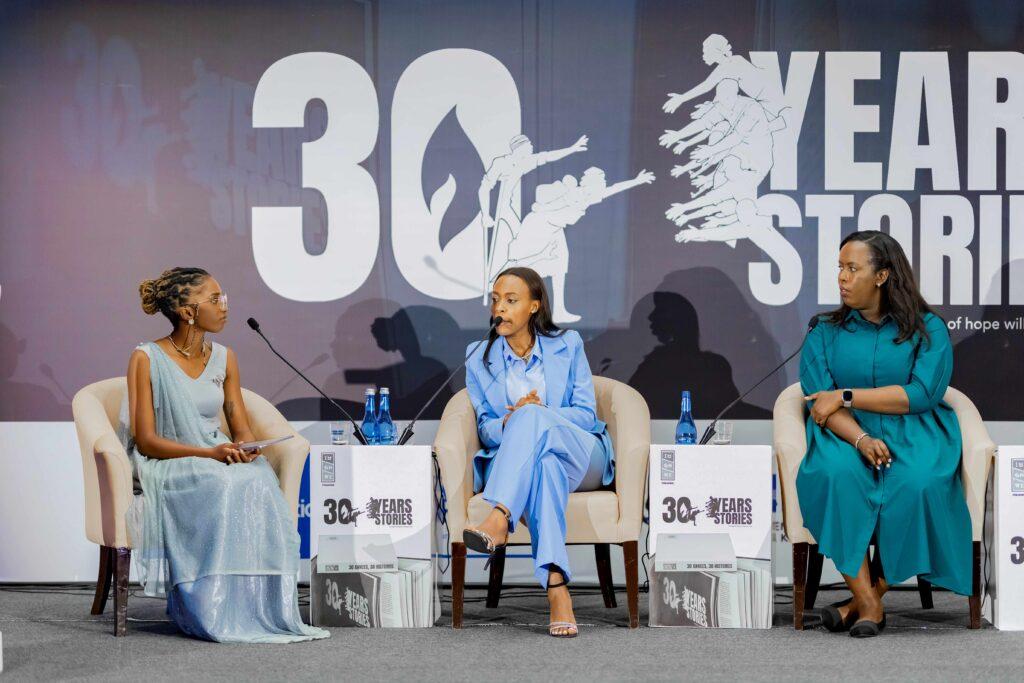
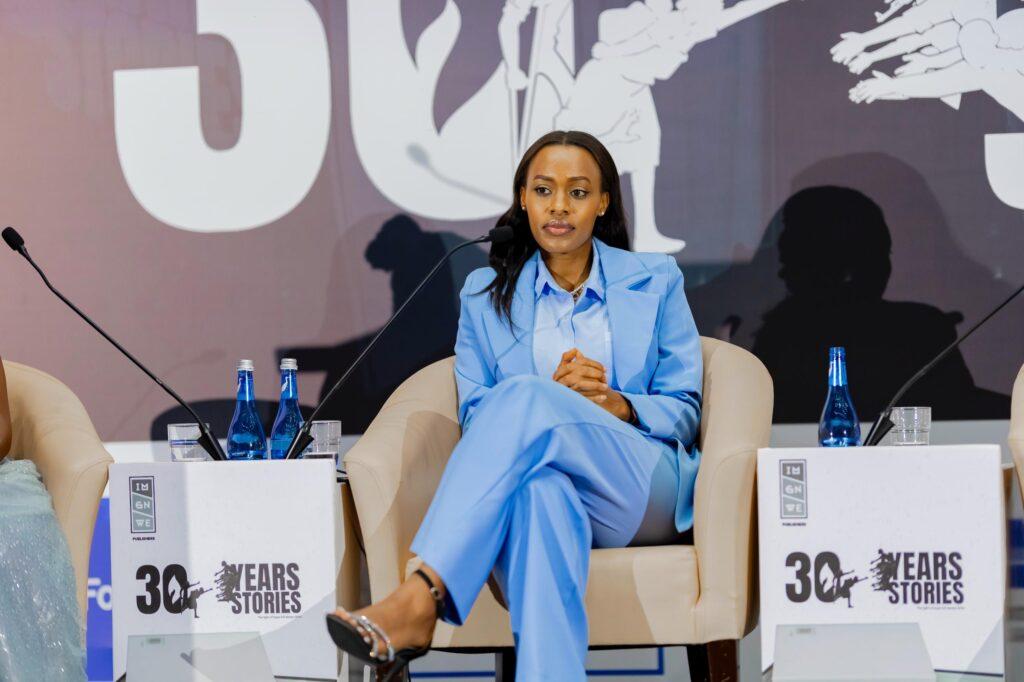
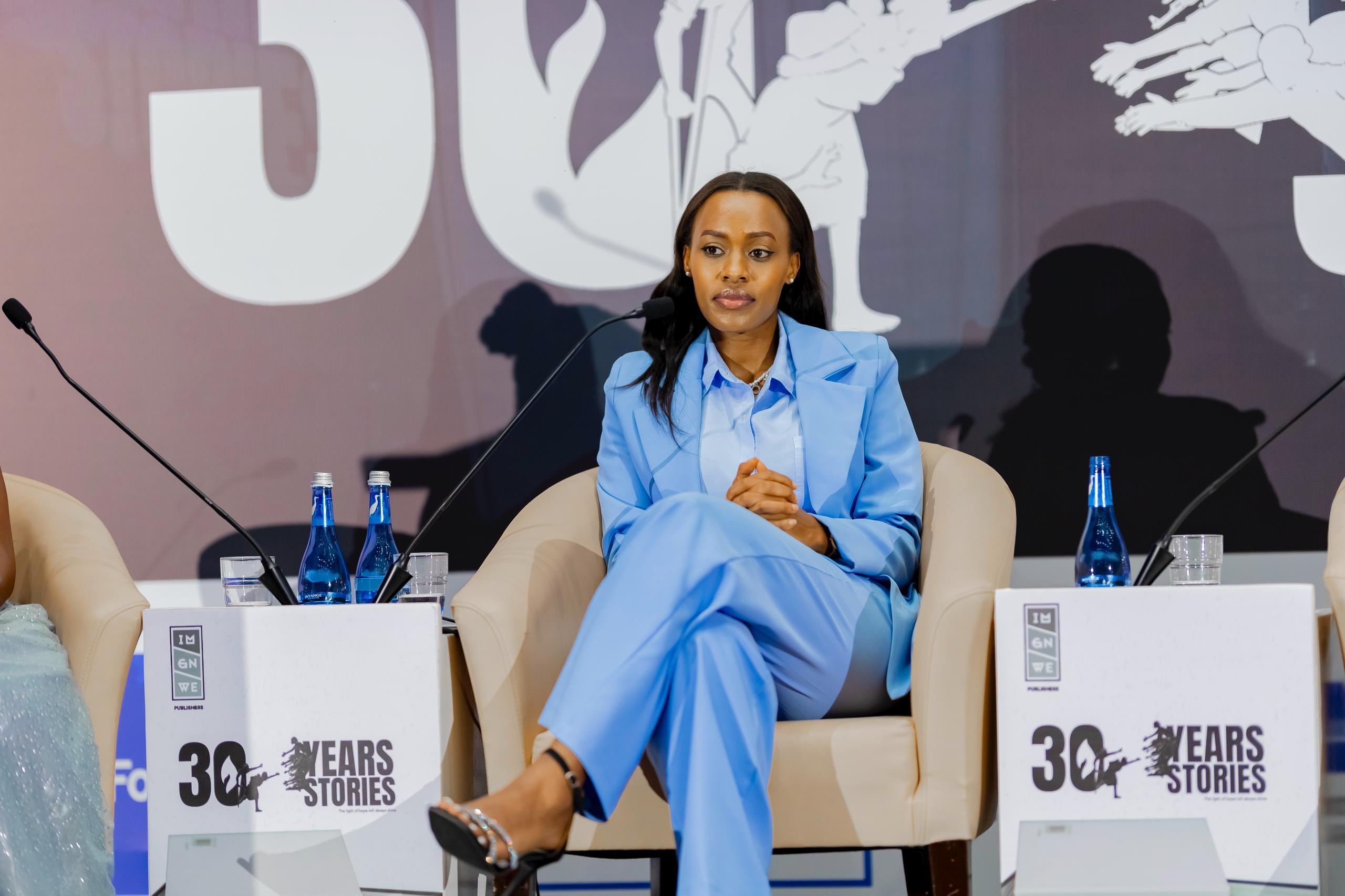
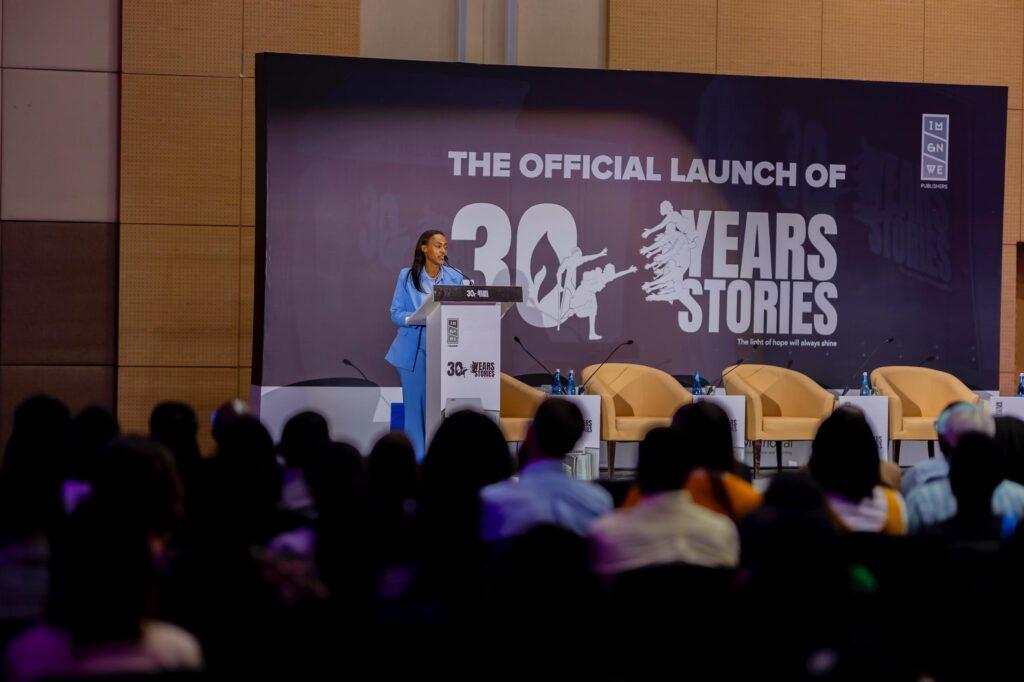
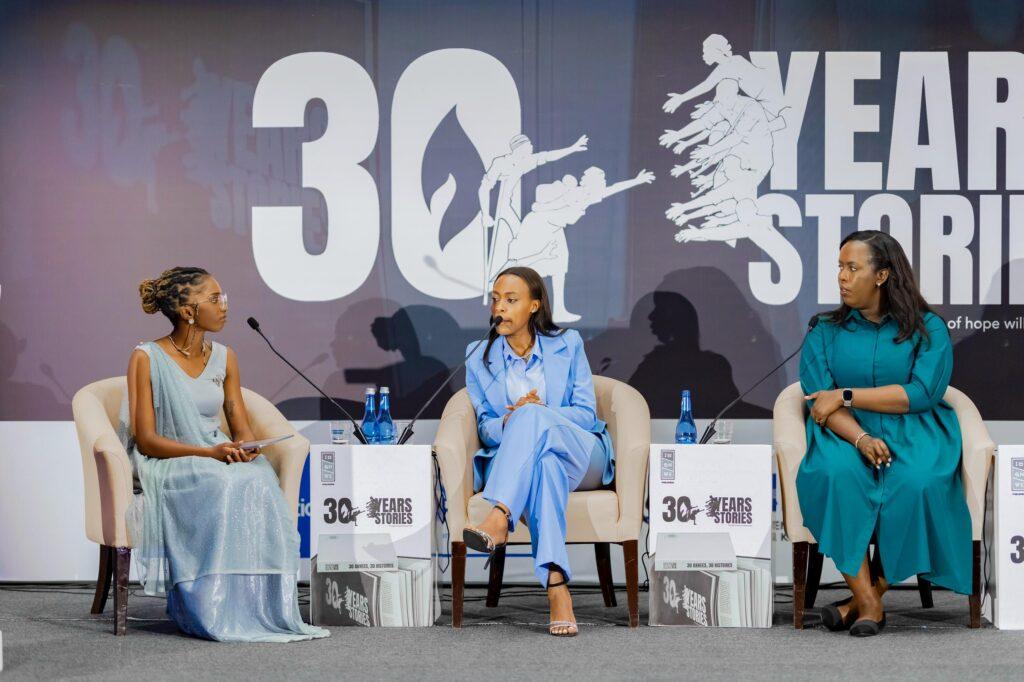
She made this statement while addressing Rwandans, friends of Rwanda, genocide survivors, and delegates who had gathered at Kigali Convention Center on 30th April, 2025 during the launch of ‘30 years, 30 stories’–a memoir published by ‘Imagine We’ Rwanda.
In the book, Irma is featured among the survivors of the 1994 genocide against the Tutsi who ‘chose to use their trauma to heal and grow’, both as individuals and as a nation.
At its core, the book aims to “preserve and amplify authentic first-hand experiences for prosperity, whilst educating the world about Rwanda’s history and celebrating its extraordinary recovery.”